Frequently Asked Questions (FAQ)
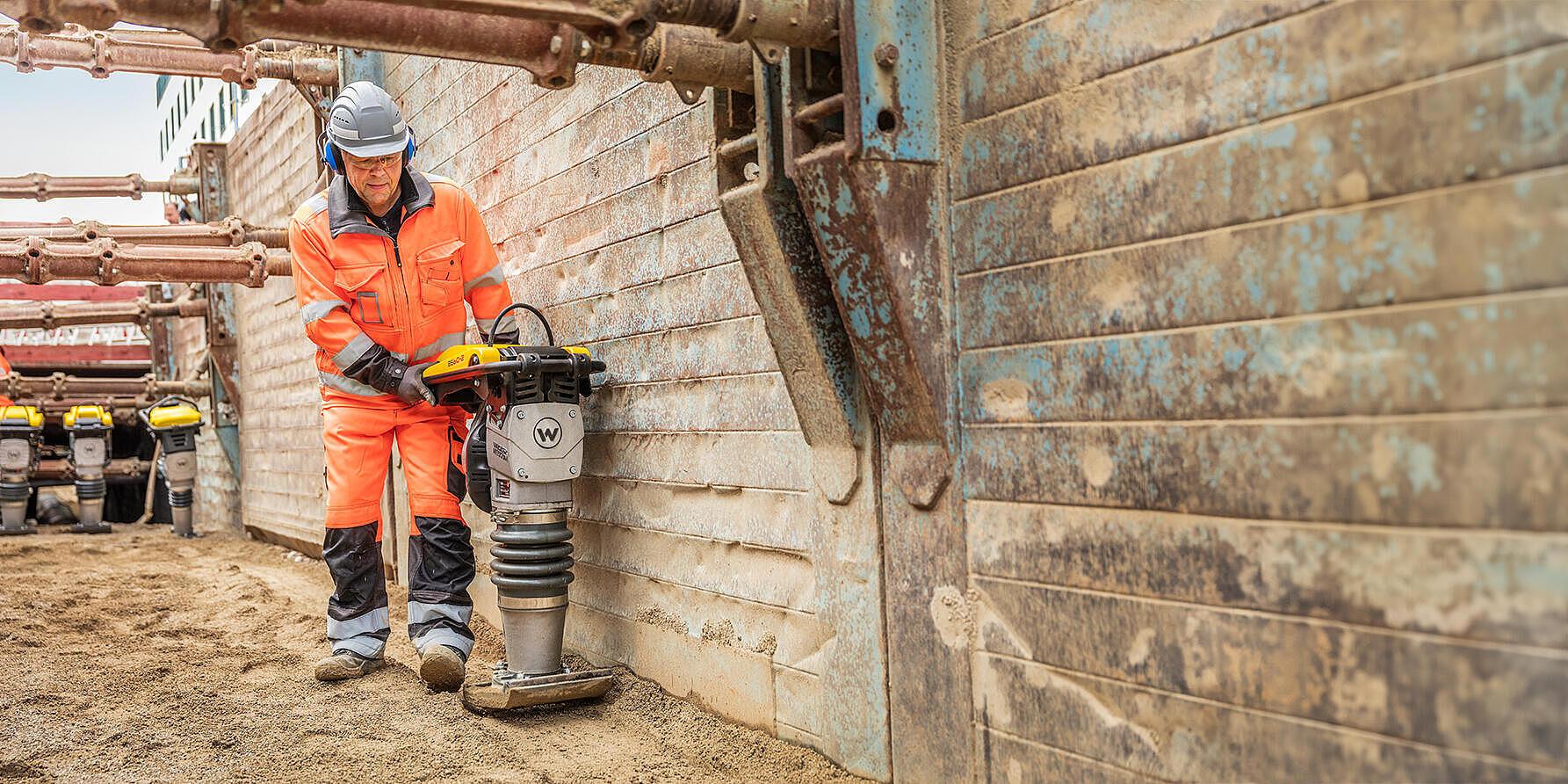
1. How many passes are required with a vibratory rammer?
2-3 passes are generally enough to completely compact a layer.
2. Can you compact any ground depth with a vibratory rammer?
No, only 3–7 cm are effectively compacted with each pass. For greater depths, it is necessary to work in layers.
3. Is a vibratory rammer also suitable for sand?
Conditionally. Vibratory plates are normally better suited for loose sand.
4. How thick can a soil layer be before using the vibratory rammer?
Max. 20 cm are recommended per layer.
5. How do you recognize that the soil is adequately compacted?
When inspecting the area, it barely yields and shows no further settlements.
6. Which machine is better for paving works?
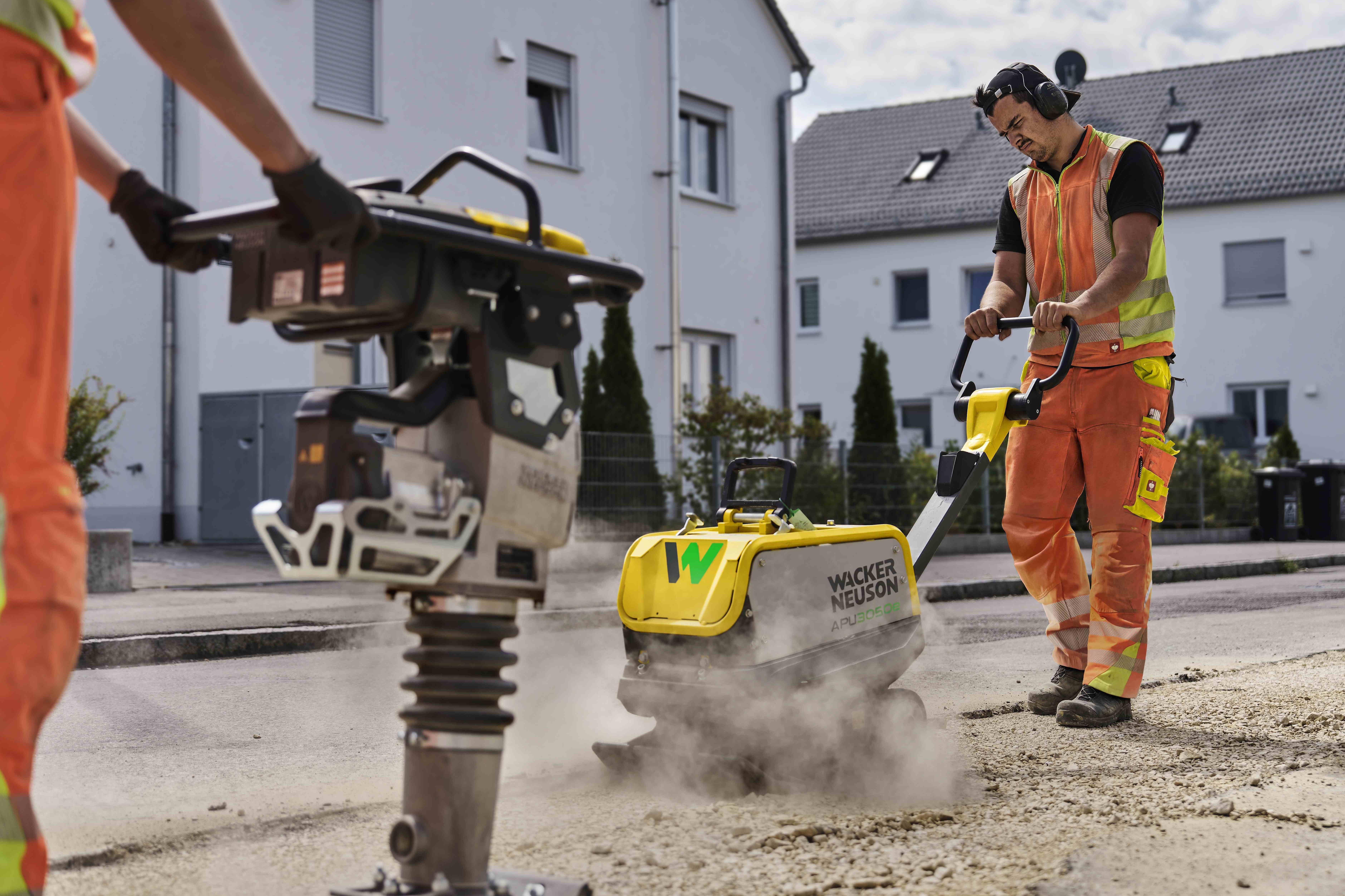
Vibratory plates are better suited for larger paved areas, vibratory rammers for border areas.
7. Can you over-compact the ground?
Yes, this can happen. If the soil is compacted for too long or with too much energy, the soil structure can be destroyed. The soil becomes too dense, it loses its elasticity, and water can no longer seep through, but it sits on the surface. Cohesive soils are particularly sensitive. It is therefore important to always compact in layers and to the required compaction grade.